
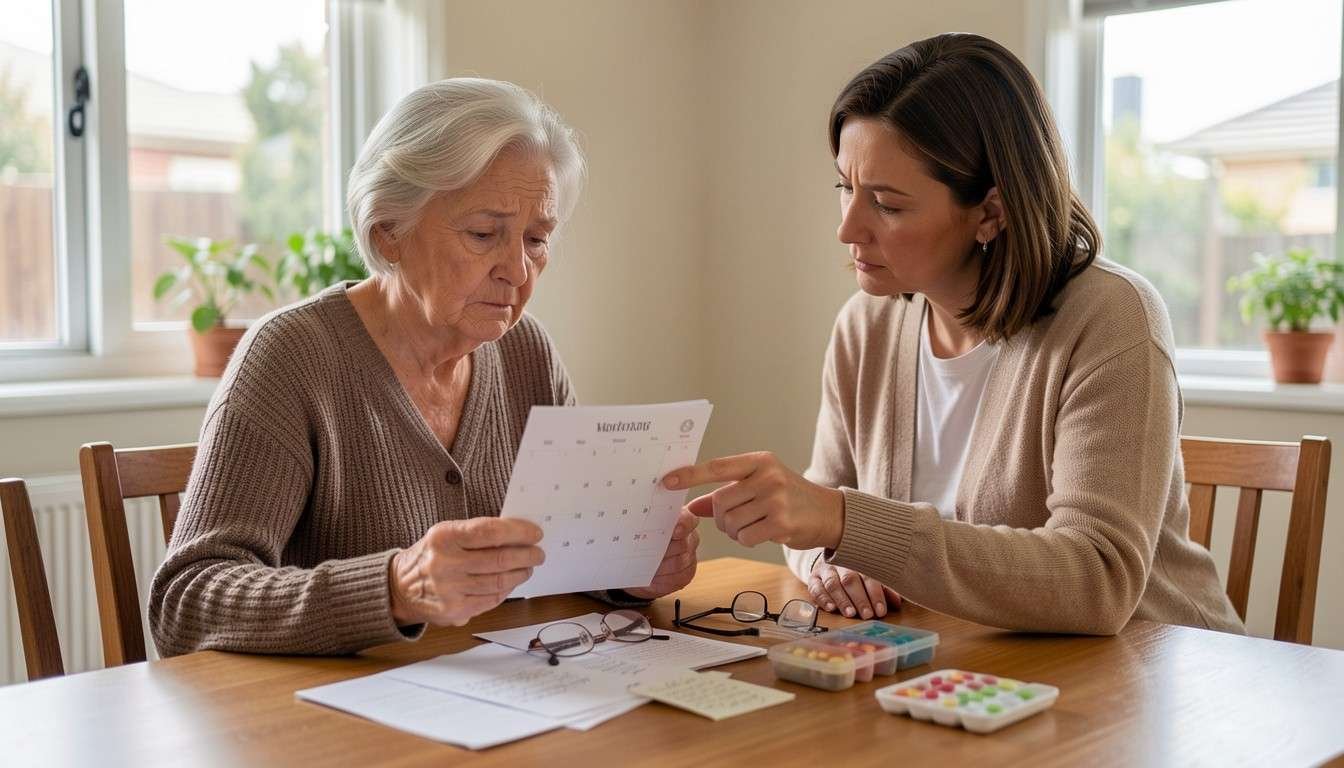
If you keep noticing small changes in memory, judgement, language, or day-to-day routines, it is worth taking them seriously rather than putting them down to “just ageing”. Dementia Australia says early warning signs can include increasing forgetfulness, repetition, trouble with familiar tasks, confusion about time and place, language problems, loss of initiative, and changes in judgement or behaviour.
Early Signs of Dementia Families Often Miss
If your parent, partner, or older relative starts forgetting names now and then, you may not worry at first. That makes sense. Everyone has off days. Still, dementia often begins with subtle changes that build slowly over time, and families in Melbourne often miss the pattern because each sign seems small on its own.
The key issue is not one forgotten detail. The key issue is change. If you see a clear shift in how someone remembers, communicates, manages daily tasks, or handles familiar routines, you should pay attention. Dementia Australia explains that early warning signs usually show up as changes that happen more often and begin to affect everyday life.
You do not need to diagnose anything yourself. Your role is to notice, record, and act early. That approach gives your loved one a better chance of getting the right assessment, the right support, and the right plan for staying safe at home in Melbourne. CDAMS services in Victoria exist for this exact reason, offering specialist diagnosis, education, and support for people with memory loss or changes in thinking.
Why families often miss the early signs
Early dementia rarely begins as a dramatic event. Instead, it often appears as repeated questions, missing appointments, confusion during familiar tasks, unusual mistakes with money, or pulling back from hobbies and social contact. Because each issue can be explained away on its own, families often delay seeking help.
That delay is common for another reason. Many people assume memory loss is a normal part of ageing. Mild forgetfulness can happen with age, but dementia warning signs are different because they happen more often, get worse, and interfere with daily living. Dementia Australia makes this distinction clear in its guidance on early warning signs.
You may also notice that the person seems fine in short conversations. That happens often. Someone can hide early symptoms for a while by relying on routine, humour, or help from others. However, the strain tends to show up later in missed bills, medication errors, getting lost, poor judgement, or repeated confusion at home.
Early signs families often overlook
One of the most common early signs is short-term memory loss. This does not mean forgetting a name once. It means forgetting recent conversations, asking the same question again and again, or struggling to learn new information that would once have been easy to remember. Dementia Australia lists this as a major early warning sign.
Another sign is trouble doing familiar tasks. You might see your loved one stop halfway through making tea, forget the steps in cooking a simple meal, or get confused when paying regular household bills. If a familiar task suddenly feels unfamiliar, that matters. Dementia Australia includes difficulty with everyday tasks such as meal preparation and paying bills among its warning signs.
Confusion about time and place can also appear early. Your loved one may mix up the day, miss appointments, lose track of where they are going, or become unsure in familiar areas. ABC’s reporting on dementia warning signs notes that someone with early dementia may have trouble reorienting themselves even in common places.
Language changes are another clue. You may notice pauses, word-finding problems, difficulty following conversations, or vague speech that was not there before. These changes can look like tiredness or distraction, but if they keep happening, they should not be ignored. Dementia Australia identifies problems with language as an early warning sign.
Judgement often changes before families expect it to. A person may start making poor financial decisions, hand over the wrong amount of cash, trust strangers too easily, or misread risk in daily situations. Difficulty with calculation and decision-making can be an early sign, especially if managing money was once a strength.
Misplacing items in unusual places is another pattern to watch. Many people lose keys now and then. Dementia becomes more likely when items turn up in strange spots and the person cannot retrace their steps or explain how the item got there. ABC gives the example of objects being placed in clearly inappropriate locations.
Mood and personality changes are also easy to miss. Some people become more anxious, more suspicious, more irritable, or less interested in social contact. Others seem flat, withdrawn, or unusually passive. Dementia Australia notes that loss of initiative and reduced motivation can be early warning signs.
What to do when you notice changes
First, keep a clear written record for two to four weeks. Write down what happened, when it happened, what task was involved, and whether there was any safety risk. For example, note repeated medication errors, confusion while cooking, missed appointments, wandering, unpaid bills, or changes in personal hygiene. A symptom diary gives a GP useful detail and helps move the conversation away from vague concerns. Dementia assessment services rely on the pattern of symptoms, not a single moment.
Second, book a GP appointment early instead of waiting for a crisis. Dementia Australia advises assessment and diagnosis when concerns about memory or thinking arise, and this is important because other medical issues can also cause similar symptoms.
Third, prepare for the appointment properly. Take your notes, a list of medicines, recent health changes, and examples of what has changed. If possible, attend with the person and ask if you can briefly share your observations. A good appointment is usually specific. “Mum is forgetting things” is less helpful than “Mum asked the same question six times yesterday, missed her blood pressure tablets twice this week, and got lost driving to the local shops.” Dementia Australia says diagnosis may involve medical history, cognitive testing, physical checks, and sometimes referral to specialists.
Fourth, ask what the next step should be in Melbourne. Depending on the situation, the GP may arrange tests, refer to a specialist, or suggest a Cognitive Dementia and Memory Service. Victorian CDAMS clinics provide expert diagnosis, information about treatment, help with future planning, and links to community support.
When to seek help urgently
Some changes should not wait. If your loved one is wandering, getting lost, forgetting essential medicines, leaving the stove on, falling more often, becoming paranoid, or showing sudden major confusion, you should seek medical advice quickly. These signs point to safety risks at home and can place both the older person and family carers under pressure. CDAMS and related services are meant to help with exactly these day-to-day issues and care planning.
You should also act quickly if behaviour has changed sharply or if confusion has come on suddenly. Dementia usually develops gradually. A sudden change may point to something else, such as delirium, infection, dehydration, or medication problems, and that needs prompt medical review. Dementia testing and diagnosis guidance stresses the need for proper assessment rather than guesswork.
If you need advice and do not know where to start, the National Dementia Helpline is available through Dementia Australia. It offers information and support for people living with dementia, families, and carers.
What assessment may involve in Melbourne
A dementia assessment does not usually happen in one quick step. It often begins with a GP reviewing symptoms, medicines, general health, and changes in daily function. From there, the person may have memory and thinking checks, blood tests, scans, or referral to a specialist clinic. Dementia Australia explains that diagnosis often involves several stages because doctors need to rule out other causes and understand the pattern of decline.
In Victoria, CDAMS plays an important role for many families. These services are specialist, multidisciplinary clinics that assess memory loss and cognitive change, provide education and support, and help families plan practical next steps. The Victorian health department says people can be referred by GPs or community agencies, and some services accept direct contact.
At Austin Health, for example, the CDAMS clinic provides expert diagnosis, support, and guidance on future planning, with referrals from GPs, specialists, or health practitioners, and direct contact options for families and carers. Austin also notes that wait times can apply, which is another reason not to delay once concerns start.
Why early action matters
Early action does not cure dementia, but it does help you make better decisions while the person can still express their wishes clearly. That includes decisions about care, finances, transport, home safety, legal arrangements, and support at home. CDAMS services specifically help families with planning, treatment information, and links to community supports.
There is also a strong public health reason to act early. Dementia Australia estimates that 433,300 people were living with dementia in Australia in 2025, and this number is projected to rise to 812,500 by 2054. That growth means more Melbourne families will face these concerns at home, often while trying to balance work, caregiving, and distance.
The earlier you act, the more options you usually have. You can adjust routines, reduce home risks, arrange transport, bring in support workers, and create a care plan before stress becomes unmanageable. That is far easier than trying to respond after a hospital visit, a serious fall, or a wandering incident.
Practical ways to support someone at home
Start with routine. People with memory and thinking changes often cope better when the day follows a familiar structure. Keep wake times, meals, medicines, bathing, and outings at similar times. Consistency reduces confusion and lowers stress. Dementia services in Victoria and specialist memory services focus heavily on day-to-day support because routine often helps people stay steadier for longer.
Next, simplify the home environment. Put labels on cupboards if needed. Keep keys, glasses, hearing aids, and medicines in the same place every day. Reduce trip hazards. Check lighting in hallways and bathrooms. Make sure emergency contacts are visible. If driving is becoming unsafe, arrange regular lifts or use an in-home transport service in Melbourne through a trusted provider.
Then look at care tasks one by one. If bathing is slipping, in-home personal care may help. If medicines, wound care, or health monitoring are becoming difficult, in-home nursing care may be more appropriate. If family carers are tired, in-home respite care can give them breathing room without moving their loved one out of the home. These options fit the reality that the user’s business delivers care at home rather than through a residential facility.
Social withdrawal also needs attention. A person with early dementia may stop joining conversations, hobbies, or local outings because they feel embarrassed or overwhelmed. Regular companionship can help keep confidence up and reduce isolation, especially if the support worker understands dementia and keeps conversation calm and simple. A service such as in-home companion care can support this part of daily life.
Domestic tasks matter too. When clutter builds up, laundry is missed, or the fridge becomes unsafe, the home can decline quickly. Practical help with cleaning, meal preparation, and general routines often makes a bigger difference than families expect. If this is becoming an issue, in-home domestic assistance may help keep the person safe and comfortable.
If you are also trying to understand funding, it helps to read a plain-English guide on Home Care Packages in Melbourne or a step-by-step article on how to apply for a Home Care Package. For families dealing with dementia at home, it is also useful to read dementia care at home and how to create a safe and supportive environment and an in-home dementia care guide for families and carers. These internal resources are closely aligned with the topic and fit natural user intent.
A calm next step for Melbourne families
If you have noticed repeated memory lapses, growing confusion, or changes in judgement, do not wait for proof. Start a diary, book the GP, and ask whether a Melbourne memory service or CDAMS referral makes sense. That is the most practical first step.
If your family also needs help keeping life steady at home, you can explore Golden Point Age Care’s in-home aged care services or contact the team for a quiet conversation about what support may suit your situation. A low-pressure discussion can help you work out whether personal care, dementia care, nursing, respite, domestic help, transport, or Home Care Package support would ease the load while your loved one stays in familiar surroundings.
FAQs
What are the earliest signs of dementia families usually miss?
Families often miss repetition, trouble with familiar tasks, small money mistakes, confusion about dates, language problems, and withdrawal from social life because each sign can seem minor on its own. Dementia Australia lists these as common early warning signs.
Is memory loss always dementia?
No. Memory loss can have other causes, including medical conditions, medicines, stress, poor sleep, or delirium. That is why proper assessment matters. Dementia Australia says diagnosis involves checking for other possible causes as well as assessing cognition.
When should you seek help in Melbourne?
You should seek help when changes become repeated, noticeable, and linked to daily function or safety. Book a GP appointment early, especially if the person is missing medicines, getting lost, or struggling at home. Victorian dementia services and CDAMS can support the next steps.
Can someone with early dementia stay at home?
Yes, many people can continue living at home with the right support, routines, and safety measures in place. Specialist services and community supports can help families plan for this.
Who can you call for dementia advice in Australia?
You can contact the National Dementia Helpline through Dementia Australia for information, support, and guidance.

Clara Ashford
Clara Ashford is a Melbourne-based content writer specialising in healthcare and medical communications. With over a decade of experience, she creates clear, accurate and engaging content for healthcare brands, clinics and wellness organisations. Her work includes patient education materials, blogs, medical website copy, whitepapers and research articles, making complex medical information accessible and relatable. Passionate about improving health literacy, Clara combines storytelling with medical expertise to connect with readers. Outside of work, she enjoys exploring Melbourne’s café scene, reading contemporary fiction and walking along the Yarra River.
