
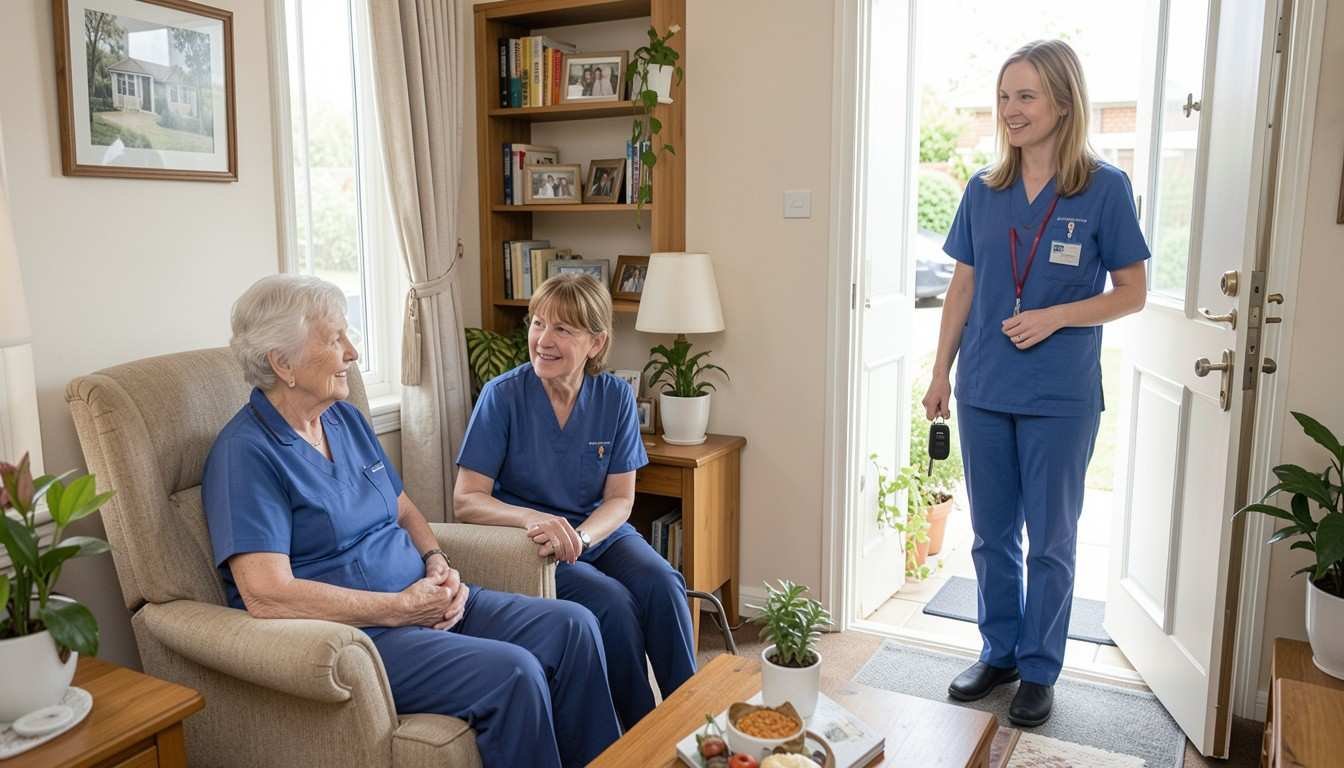
If you care for a loved one at home, you probably already know that the hardest part is not the big moments. It is the constant “being on” every day and every night. My Aged Care describes respite care as short‑term care that gives carers a break while the person they support continues to receive help and supervision. In‑home respite means that break can happen without your loved one leaving their own home.
In‑Home Respite Care in Melbourne: How It Works and Who It Helps
Respite care is not a luxury. Healthdirect explains that regular breaks help carers rest, attend their own appointments, and protect their health, which in turn helps the person they care for stay at home longer. For many Melbourne families, in‑home respite care is the most practical way to achieve this, because it brings a trained carer into the home rather than asking an older person to adapt to a new setting.
As a Melbourne‑based in‑home aged care provider, Golden Point Age Care works with many families who use in‑home respite alongside services like in‑home personal care, in‑home dementia care, in‑home nursing care, in‑home domestic assistance, in‑home companion care, and Home Care Packages. Used well, in‑home respite care can act as a pressure valve that stops carers reaching breaking point.
What in‑home respite care actually is
My Aged Care calls this “respite at home” or “flexible respite”. It describes it as support where a paid carer comes into the home during the day or overnight so that the usual carer can take a short break. Healthdirect notes that respite can last a few hours, a day, overnight, or longer, and that it can be planned in advance or organised quickly in emergencies.
In‑home respite care usually includes:
- Supervision and safety monitoring.
- Help with personal care such as showering and dressing.
- Meal preparation and general support.
- Companionship, conversation, and simple activities.
- Help with mobility, toileting, and transfers.
The person stays in their own home, follows familiar routines, and uses their own furniture and bathroom. For many older people and those with dementia, this feels calmer than moving to a day centre or a residential respite stay, especially at the beginning.
Golden Point Age Care explains their own structure for in‑home respite care in Melbourne, where a respite visit can combine supervision, personal care, domestic help, and companion care in one shift.
How in‑home respite differs from day centres and residential respite
My Aged Care and Dementia Australia both recognise several types of respite: in‑home respite, centre‑based day respite, and overnight or residential respite in aged care homes.
The main differences are:
- In‑home respite happens in the person’s own home.
- Day centres require travel and group participation.
- Residential respite involves a short stay in an aged care home.
Each has a place. Day centres can offer group activities. Residential respite can give longer breaks and provide 24‑hour support. However, in‑home respite is often the least disruptive option, especially for people with dementia who may find unfamiliar settings confusing or distressing. Dementia Australia notes that dementia‑specific respite options need to consider familiarity and routine.
Why respite matters for older Melburnians and their carers
Respite is about both sides of the caring relationship. Parkinson’s Australia reports that respite care gives carers time to rest, recharge, and look after their own health, while also supporting the person they care for through continued assistance. It also notes that many carers of people with dementia report needing more respite than they receive.
Healthdirect highlights several reasons respite is important:
- It lowers stress levels.
- It helps prevent burnout and depression.
- It gives carers a chance to attend medical appointments.
- It allows carers to maintain social connections.
- It supports the long‑term sustainability of care at home.
Dementia Support Australia’s “Staying at Home” program also emphasises respite and self‑care for carers. It shows that learning how to take breaks is part of good dementia care, because it helps people with dementia remain at home longer.
If you have been managing everything yourself for a long time, it may help to read Golden Point’s article on how in‑home dementia care supports carers to avoid burnout. In‑home respite is a key piece of that picture.
What in‑home respite looks like day to day
In practice, in‑home respite care is flexible. It can look different for each family, but some patterns are common.
Personal care and daily living support
During a respite visit, the respite carer can help with:
- Showering and dressing.
- Toileting and continence support.
- Grooming and oral hygiene.
- Transferring from bed to chair and vice versa.
This is especially important where a partner or adult child is finding physical care difficult. Instead of struggling with heavy lifting or nerve‑wracking showers, you can step back while a trained worker manages these tasks safely.
Golden Point Age Care’s in‑home personal care service fits naturally into many respite visits, providing both dignity for the person and relief for the carer.
Meal preparation and domestic assistance
In‑home respite often includes basic domestic help so that the home stays in reasonable order while you are away. That might involve:
- Preparing a simple meal.
- Making tea and ensuring hydration.
- Washing dishes.
- Doing a light tidy of main areas.
My Aged Care notes that flexible respite can cover practical help with meals and everyday tasks as part of the visit. If this ongoing load is part of what wears you down, combining respite with in‑home domestic assistance can make a clear difference.
Companionship, activities, and safe supervision
The emotional side matters as much as the practical side. A good respite visit includes:
- Conversation and reminiscence.
- Gentle activities such as puzzles, music, or a walk.
- Clear supervision and support with moving around the home.
Dementia Support Australia’s “Staying at Home” program shows that dementia‑specific respite should keep the person engaged and comfortable, not just supervised.
Golden Point’s in‑home companion care often works alongside in‑home respite, so the person sees familiar faces and continues with preferred daily activities while you are away.
Daytime, evening, and overnight respite
My Aged Care explains that respite at home can be provided during the day or overnight. That allows different patterns, such as:
- A few hours in the morning or afternoon.
- Evening support if sundowning or night‑time agitation is an issue.
- Overnight respite so the carer can sleep.
If you often feel most stressed in the late afternoon or evening, you can schedule respite visits during that time so you can step away without worrying about safety.
Who in‑home respite care helps most
In‑home respite can help almost any caring situation, but several patterns stand out.
Carers who need a regular weekly break
Some carers need a reliable two or three hours each week to attend appointments, see friends, shop, or simply rest. Healthdirect says planned respite gives carers the chance to relax and relieve stress.
In‑home respite supports this by:
- Providing a set time each week.
- Keeping your loved one at home.
- Reducing the anxiety of leaving them alone.
Families supporting someone with dementia
Dementia Australia describes respite care as an important part of dementia support, both to give carers a break and to maintain the person’s daily structure. Dementia‑specific respite programs, such as Staying at Home, show that respite can include practical strategies to manage behaviour and maintain activities.
In‑home respite is often a good first step for someone with dementia because:
- The environment is familiar.
- There is less risk of confusion from new surroundings.
- The carer can observe how their loved one responds before trying other respite options.
This fits well with Golden Point’s focus on in‑home dementia care in Melbourne, where respite is seen as one element of a broader home support strategy.
Long‑distance carers and working adult children
If you live further away or work full time, you may need in‑home respite to cover specific gaps. For example:
- During your commute.
- While you are at work shifts.
- While you travel briefly.
Articles on long‑distance caregiving highlight respite and home visits as key tools to manage care from afar. You can read more about these pressures in Golden Point’s article on the unspoken challenges of being a long‑distance caregiver.
Older couples where one partner is the main carer
Older spouses often take on more physical and emotional care than is safe. In‑home respite can:
- Prevent injury from lifting and transfers.
- Give the caring partner time to attend their own appointments.
- Reduce the sense of being “on duty” all day.
In these situations, it is common to combine respite with in‑home nursing care and domestic assistance so that both partners receive adequate support.
How in‑home respite fits with other in‑home aged care services
In‑home respite rarely stands alone. It works best as part of a wider at‑home support plan.
For example, a typical Golden Point Age Care client might use:
- Morning personal care visits.
- Domestic assistance once or twice a week.
- Companion care for social outings.
- In‑home respite for a regular break.
- Occasional nursing visits.
My Aged Care notes that respite at home is available under the Commonwealth Home Support Programme and the Support at Home program. Many people also use Home Care Packages and Support at Home budgets to fund respite hours, as discussed in Golden Point’s article on using Home Care Packages to fund dementia support at home.
Sometimes in‑home respite is enough on its own. Sometimes it is a stepping stone to other options, such as day respite or short residential respite, especially if you are starting to think about longer breaks.
Funding in‑home respite care in Melbourne
My Aged Care explains that in‑home respite is funded through short‑term care programs, including:
- Respite care under the Commonwealth Home Support Programme.
- Respite options under Support at Home.
- Periods funded by Home Care Packages.
You can also access emergency respite through Carer Gateway if something urgent happens and you suddenly cannot provide care. Healthdirect states that Carer Gateway can help you find emergency respite, including in‑home options, if you become ill or have a crisis.
Golden Point’s guides on:
- Home Care Packages in Melbourne
- how to apply for a Home Care Package
- short‑term support while you wait for a package
can help you plan how to fund respite both now and in the future.
Step‑by‑step: how to arrange in‑home respite
Healthdirect and My Aged Care give a clear order of steps.
- Register with My Aged Care if you have not already.
- Arrange an assessment.
- Discuss your need for in‑home respite during the assessment.
- Receive approval for the relevant type of support.
- Choose a provider that offers in‑home respite in your area.
- Work with the provider to plan visit times and tasks.
Golden Point’s article on how to get started with in‑home aged care in Melbourne explains the contact and assessment process in everyday language and can sit alongside this respite‑specific information.
Of course, you can also self‑fund in‑home respite care privately, especially if you want more hours than your funding covers. Many families use a mix of funded and private hours to reach a level of support that feels safe and sustainable.
Making respite work well for your family
The quality of your break depends in part on how well the respite visit is set up. Dementia Support Australia’s materials and several Australian providers suggest a few practical steps:
- Explain routines clearly. Write down meal times, medications, and preferred activities.
- Share “do and don’t” notes about communication and behaviour.
- Introduce the respite carer while you are present for the first visit.
- Start with shorter visits if your loved one is anxious about new people.
- Use your own time for genuine rest, not just more errands.
Golden Point’s article on what an in‑home carer does day‑to‑day can help you picture what to include in that written guidance.
It also helps to review respite every few months. Ask yourself:
- Does this schedule still meet our needs?
- Is my stress lower than before?
- Does my loved one seem settled with the arrangement?
If the answer is no, you may need to adjust the timing, frequency, or mix of services. Or you may need to read more about in‑home care vs residential care if your situation is changing.
If you want to explore your options in Melbourne, you can look at Golden Point Age Care’s services and locations, then contact the team for a calm conversation about how in‑home respite care could fit into your week.
FAQs
What is the difference between in‑home respite and residential respite?
In‑home respite brings a paid carer into the person’s own home for a short period so the usual carer can have a break. Residential respite involves a short‑term stay in an aged care home. My Aged Care explains that both are recognised forms of respite, but in‑home respite is often more flexible and less disruptive.
How many hours of in‑home respite can you get?
The number of hours depends on your funding and assessment. Under the Commonwealth Home Support Programme and Support at Home, respite is arranged based on need, while Home Care Packages can also fund respite as part of the budget.
Can you use a Home Care Package to pay for in‑home respite?
Yes. My Aged Care and several providers confirm that Home Care Packages can pay for in‑home respite, as long as it is part of the care plan and supports the person’s approved needs.
Is in‑home respite suitable for someone with dementia?
Yes. Dementia Australia describes respite care, including in‑home options, as a key support for people living with dementia and their carers. In‑home respite is often a gentle way to introduce respite because it does not require leaving the home environment.
How do you arrange emergency respite?
Healthdirect says that if you suddenly cannot provide care due to illness or another emergency, you can call Carer Gateway for emergency respite, including in‑home or other forms depending on availability.

Clara Ashford
Clara Ashford is a Melbourne-based content writer specialising in healthcare and medical communications. With over a decade of experience, she creates clear, accurate and engaging content for healthcare brands, clinics and wellness organisations. Her work includes patient education materials, blogs, medical website copy, whitepapers and research articles, making complex medical information accessible and relatable. Passionate about improving health literacy, Clara combines storytelling with medical expertise to connect with readers. Outside of work, she enjoys exploring Melbourne’s café scene, reading contemporary fiction and walking along the Yarra River.
