
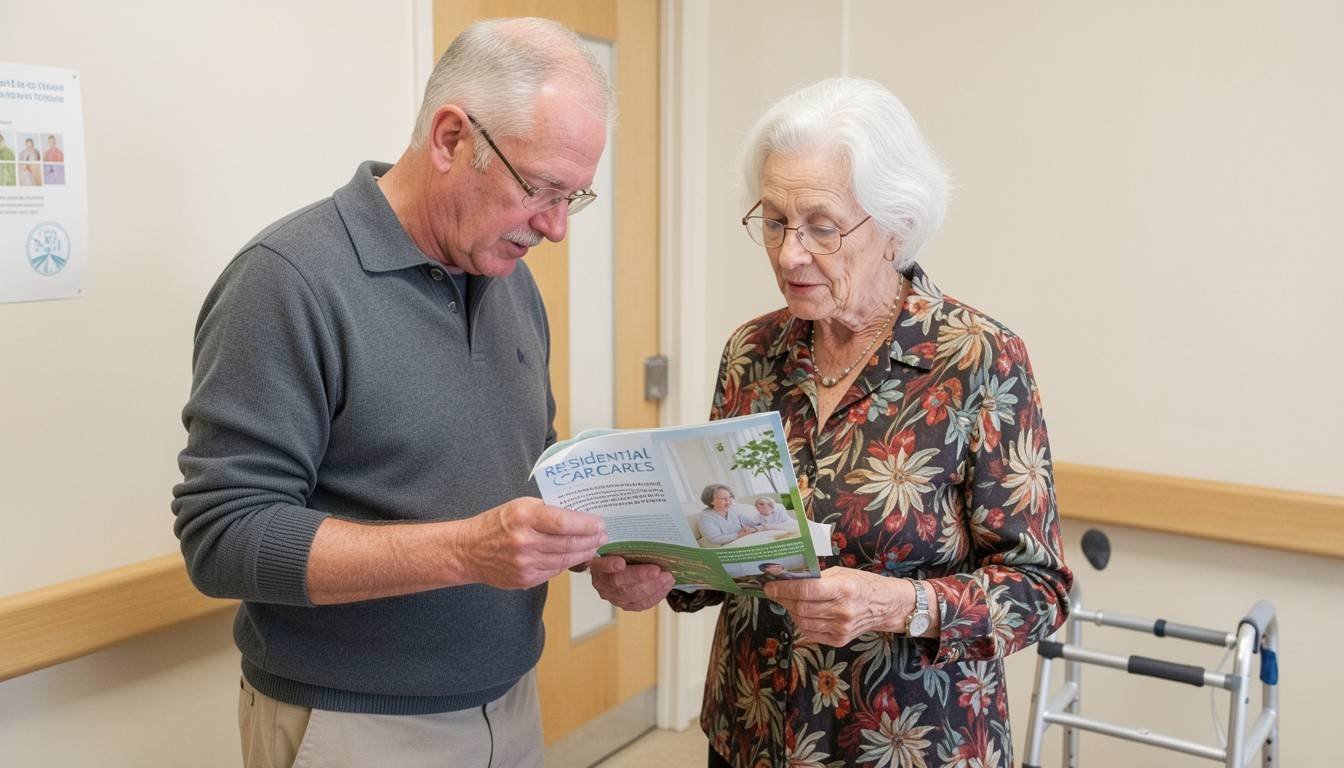
Deciding that dementia care at home may no longer be safe is one of the hardest choices you will ever face. Dementia Australia notes that moving to residential care is often an emotional decision, but sometimes it becomes the safest option for the person and the carer.
You may have done everything possible to support your loved one at home. You may have adjusted the house, built a daily routine, used in‑home dementia care, and arranged respite. Even so, there can come a point where the risks at home outweigh the benefits, especially if falls, wandering, night‑time behaviours, and carer burnout all start to increase.
This guide helps you recognise the signs that home may no longer be safe most of the time. It also shows you how to strengthen in‑home support while you decide, and how to move forward in a calm, planned way rather than waiting for a crisis.
How dementia progression affects safety at home
Dementia affects much more than memory. Over time it can change judgement, perception, insight, mobility, behaviour, and sleep. Clinical reviews on wandering and dementia report that people may misjudge risks, misread the environment, or misinterpret noise and shadows, which increases confusion and unsafe behaviour.
The Alzheimer’s Association highlights wandering, getting lost, and poor awareness of danger as common dementia features, especially in later stages. This is why safety issues at home often build gradually. At first you may see small lapses: a missed appointment, a forgotten saucepan, a minor fall. Later, these can grow into repeated incidents that you cannot fully prevent, even with a dementia‑friendly home and support.
If you have not already, you may find it useful to read Golden Point Age Care’s earlier articles on dementia care at home and how to create a safe environment and creating a dementia‑friendly home room‑by‑room. These cover the “how to make home as safe as possible” stage that usually comes before this decision point.
The core question: is home still safe most of the time?
Dementia Australia does not give a simple yes or no rule about when to move into residential care. Instead, their residential care guidance encourages families to consider safety, health, carer wellbeing, and the person’s quality of life together.
One useful way to think about it is this question:
“Is home still safe, realistic, and workable most of the time, or do I feel like we are close to disaster most days?”
If you are constantly worried about falls, fire, wandering, or aggression, and you feel nothing you try changes that, then home may no longer be the safest place. Dementia Support Australia points out that residential care may offer more consistent supervision and specialised support for some people, especially where risks have become high.
There will never be a perfect day when everyone feels fully ready. What you can look for instead is a pattern of red flags.
Red flag signs that dementia care at home may no longer be safe
Frequent falls and near‑falls
Repeated falls, near‑falls, or unexplained bruises are a major warning sign. Residential dementia care providers list frequent falls as one of the clearest indicators that current support is not enough. A 2026 article on falls and wandering risk management in memory care notes that specialist environments can reduce fall risk through flooring, lighting, staffing, and monitoring.
At home, if you have already:
- Removed trip hazards.
- Added rails and aids.
- Adjusted furniture.
- Used in‑home personal care for transfers.
And your loved one is still falling regularly or needing ambulance call‑outs, it may be time to re‑think the setting.
Wandering and leaving the house unsafely
Wandering is common in dementia and can be dangerous. The Alzheimer’s Association says more than half of people with dementia will wander at some point, which can lead to serious harm if they cannot find their way back.
You should take particular care if:
- Your loved one has left the house unnoticed.
- They have been found outside in unsafe conditions.
- They try to leave at night or become fixated on “going home”.
- You feel you cannot sleep properly because you must listen for movement.
Clinical reviews on dementia wandering stress that 24‑hour supervision and secure environments are often required when wandering is frequent. In such cases, even strong in‑home support may not be enough.
Kitchen, fire, and medication risks
Fire and medication issues are other strong red flags. Articles on “time for memory care” highlight repeated kitchen incidents, such as leaving the cooker on, burning pans, or placing items in unsafe appliances, as signals that supervision needs have changed.
Similarly, ongoing medication problems matter. If your loved one:
- Regularly misses doses.
- Takes extra doses.
- Cannot understand what each medicine does.
- Or resists all attempts at safe support.
Then medication risk becomes part of the safety picture, especially if you are not always in the house.
Night‑time restlessness and behaviours
Sundowning, night wandering, calling out, and disturbed sleep can turn nights into a second shift for carers. WebMD lists severe sleep disruption, especially when it affects safety, as one of the signs that memory care may be needed.
If you are up multiple times a night, and both you and your loved one are exhausted during the day, safety and health can start to decline quickly. In these cases, residential care with night staff may provide more reliable support.
Aggression, severe distress, or risky behaviour
Behavioural changes can also indicate that home may no longer be the safest setting. Providers and dementia charities list persistent aggression, severe agitation, or behaviour that puts other people at risk as common triggers for residential care discussions.
You should pay attention if:
- Physical aggression or serious verbal aggression is frequent.
- Other vulnerable family members feel unsafe.
- You feel afraid in your own home.
- Behaviour has escalated despite medication reviews and strategies.
Residential dementia care units are better equipped to manage such behaviours with trained staff, structured routines, and secure layouts.
Neglect of hygiene, nutrition, and appointments
If the person is regularly:
- Refusing to shower or change clothes.
- Eating very little or forgetting to eat.
- Missing essential medical appointments.
- Losing weight without explanation.
Even with support, these can be signs that home care is no longer keeping pace with their needs. Dementia care homes often provide structured meal times, hygiene routines, and health monitoring that can be hard to maintain at home once resistance is high.
When the carer’s situation becomes unsafe
The decision is not only about the person with dementia. Better Health Channel stresses that carers themselves need support and that carer health is a key part of safe dementia care.
Warning signs for carers include:
- Severe fatigue, anxiety, or depression.
- New or worsening health problems.
- Back injuries from lifting and transfers.
- Feeling constantly on edge or unable to rest.
- Relationship breakdown or social isolation.
If one person is expected to provide near‑constant supervision, heavy lifting, and night‑time support, the risk of injury and burnout is high. Research on Australian family carers of people with dementia shows that carers often reach a breaking point before asking for help.
Residential care may be the safest option when:
- No combination of in‑home services can give you enough rest.
- You are physically unable to lift, transfer, or assist safely.
- You are starting to have health crises yourself.
If you recognise these signals, it can help to read Golden Point Age Care’s article on how in‑home dementia care supports carers to avoid burnout. This explains how to use in‑home services and respite first and then decide whether residential care is the next step.
Have you reached the limit of in‑home support?
Before you conclude that home is no longer safe, it is worth asking whether you have used all realistic in‑home options. Dementia Australia’s home care guidance shows that many people can live at home longer with the right mix of personal care, domestic help, respite, and dementia‑aware support.
In Melbourne, this can include:
- In‑home personal care.
- In‑home dementia care.
- In‑home nursing care.
- In‑home domestic assistance.
- In‑home companion care.
- In‑home respite care.
- In‑home transport services.
You can also use Home Care Packages in Melbourne or the new Support at Home program to fund part or all of this support, as explained in the guide on using Home Care Packages for dementia support.
However, there is a line where even well‑planned in‑home care is no longer enough. Dementia Australia notes that moving into residential care may be necessary when 24‑hour supervision is required, behaviour is difficult to manage safely, or carers are no longer able to provide care.
Planning ahead before a crisis
Dementia Australia strongly encourages families to think about residential care early, even if you hope you will never need it. Planning does not mean you have failed. It means you are prepared if circumstances change.
Here are practical steps you can take:
- Talk about preferences for care while your loved one can still express them.
- Discuss what “safety” and “quality of life” mean for your family.
- Consider legal planning such as enduring powers and medical decision‑makers.
- Read about in‑home care vs residential aged care.
- Learn how assessments for residential care work through My Aged Care.
Alzheimer’s WA has a detailed resource on how to talk about moving to residential care, which emphasises honesty, empathy, and involving the person as much as possible.
How residential dementia care can help
Residential dementia care is not the right choice for everyone, but it does have specific advantages in higher‑risk situations. Dementia Australia explains that residential care offers 24‑hour support, trained staff, set routines, and secure environments, which can improve safety and relieve pressure on family carers.
Benefits can include:
- Continuous supervision and monitoring.
- Environments designed to reduce falls and wandering.
- Structured meal times and medication management.
- Access to allied health, activities, and social contact.
- Relief from heavy physical care for family members.
Families sometimes report that, after the move, their relationship with the person improves because visits can focus more on connection and less on tasks.
A balanced path: strengthening home support while you decide
The decision to move does not have to be sudden. You can strengthen in‑home support and test options while you think.
You might:
- Increase in‑home personal care or dementia care hours.
- Add in‑home respite care to protect your health.
- Use companion care to reduce isolation and give you time out.
- Talk with Golden Point Age Care about a realistic care plan using a mix of funded and private services.
Dementia Australia also points to short‑term residential respite as a way to try the environment and see how your loved one responds before making a permanent decision.
A practical safety and wellbeing checklist
To make this less emotional and more practical, you can use two simple scorecards: one for home safety and one for carer health.
For home safety, rate each of these from 0 (no issue) to 3 (serious concern):
- Falls and near‑falls.
- Wandering and leaving the house.
- Kitchen and fire risk.
- Medication errors.
- Night‑time behaviours.
- Aggression or severe distress.
- Neglect of hygiene and nutrition.
For carer health:
- Physical health problems.
- Sleep quality.
- Emotional strain.
- Ability to leave the house.
- Impact on work or other responsibilities.
- Support from family or services.
If most scores are 0–1, strengthening in‑home care and safety may be enough. If many scores are 2–3, and they stay high even after adding support, it may be time to start residential care planning.
Golden Point Age Care’s articles on how to tell if your ageing parent is safe living at home alone in Melbourne and 5 subtle signs your parent might need in‑home assistance can help you think through these scores in more detail.
Next steps for Melbourne families
If you believe home is no longer safe most of the time, you can:
- Speak with your GP about safety and behaviour.
- Contact My Aged Care to ask about residential care assessment.
- Call Dementia Australia’s National Dementia Helpline for guidance and support.
- Talk with an in‑home care provider like Golden Point Age Care about bridging support and planning.
Golden Point Age Care works with families across Melbourne through in‑home dementia care and related services. If you are at a crossroads, you can contact Golden Point Age Care for a respectful, no‑pressure conversation about whether to increase in‑home support, use respite, or start preparing for residential care.
FAQs
What are the clearest signs that dementia care at home is no longer safe?
The clearest signs include frequent falls, wandering or leaving the house unsafely, kitchen and fire incidents, serious medication problems, severe night‑time disruption, aggression, and clear neglect of hygiene or nutrition, despite good in‑home support.
How do you know whether to increase in‑home care or move to residential care?
If you have not yet used in‑home dementia care, respite, and Home Care Package funding, it is often worth increasing support at home first. If risks remain high even with strong support, residential care may offer safer 24‑hour supervision. Dementia Australia suggests weighing safety, carer health, and quality of life together.
Does moving to residential care mean you have failed as a carer?
No. Dementia Australia and other charities emphasise that moving to residential care is not a failure. It is a change in care setting based on safety and needs, and many carers stay heavily involved after the move.
Who decides that someone with dementia should move into residential care?
The decision usually involves the person (if possible), family members, the GP, and an aged care assessment through My Aged Care. The final choice sits with the person and their decision‑maker, but assessments guide what level of care is appropriate.
What help is available in Melbourne while you decide?
You can access help through Dementia Australia, Dementia Support Australia, My Aged Care, and local in‑home aged care providers such as Golden Point Age Care. Support can include information, counselling, respite, and in‑home care while you weigh residential options.

Clara Ashford
Clara Ashford is a Melbourne-based content writer specialising in healthcare and medical communications. With over a decade of experience, she creates clear, accurate and engaging content for healthcare brands, clinics and wellness organisations. Her work includes patient education materials, blogs, medical website copy, whitepapers and research articles, making complex medical information accessible and relatable. Passionate about improving health literacy, Clara combines storytelling with medical expertise to connect with readers. Outside of work, she enjoys exploring Melbourne’s café scene, reading contemporary fiction and walking along the Yarra River.
