
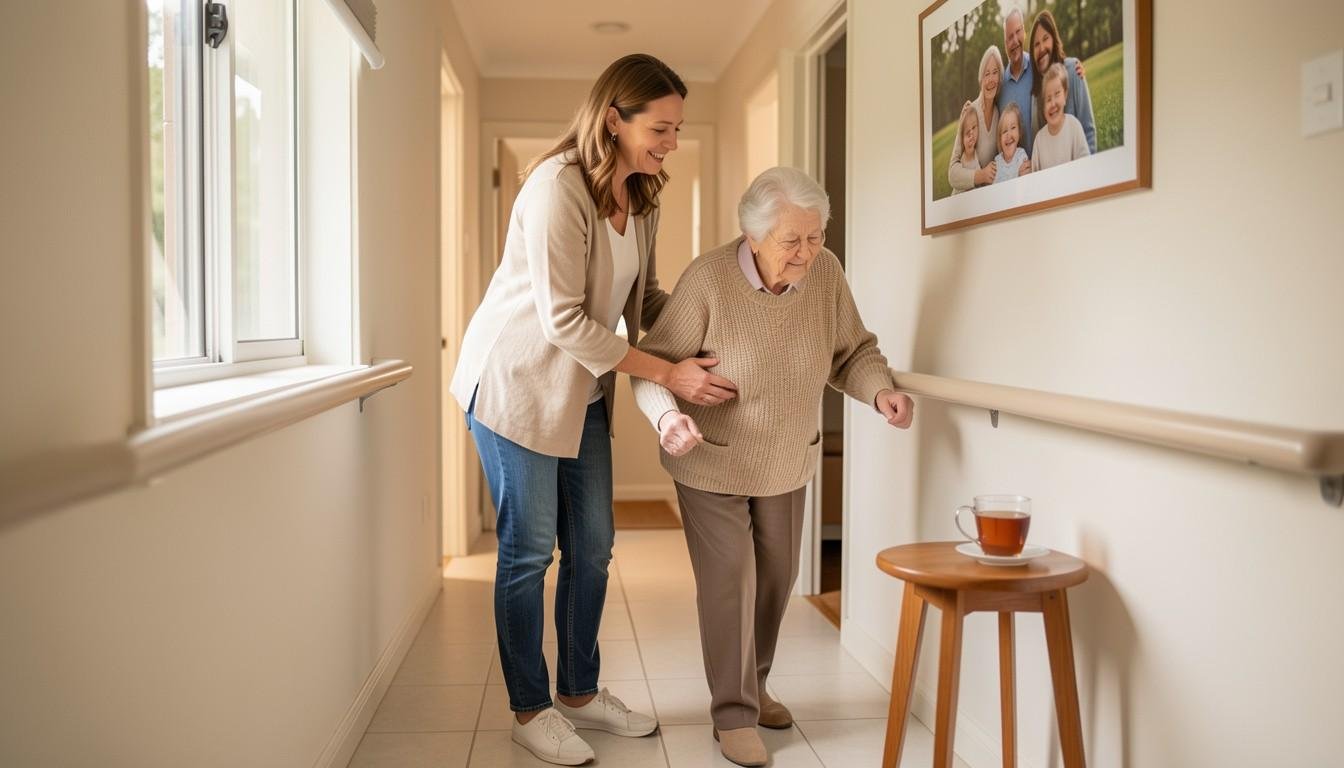
If you want a home to feel safer for someone living with dementia, start with simple, practical changes. Dementia Australia and Healthdirect both stress that better lighting, clearer walkways, familiar layouts, colour contrast, and fewer trip hazards can reduce confusion and support independence at home.
Creating a Dementia-Friendly Home: Room-by-Room Safety and Design Checklist
A dementia-friendly home does not need to look clinical. In fact, the best results often come from making the home easier to read, easier to move through, and easier to use without changing its familiar feel. Dementia Australia says people living with dementia often do better in spaces that stay consistent, well lit, uncluttered, and simple to understand.
This matters more than ever in Australia. Dementia Australia’s prevalence estimates show that hundreds of thousands of Australians are living with dementia, and the number is expected to keep rising in the coming decades. That means more Melbourne families will need practical ways to support safe living at home.
If you are planning changes for yourself, your spouse, or an ageing parent, this guide gives you a room-by-room dementia home safety checklist that you can act on straight away. It also helps you understand what works, what often backfires, and when it may be time to bring in extra support such as in-home dementia care, in-home nursing care, or in-home domestic assistance.
Why small changes matter
Dementia often affects memory, depth perception, judgement, attention, and the ability to process visual information. Because of that, the home environment plays a direct role in daily safety. Healthdirect explains that a supportive home can help a person with dementia feel safer, more comfortable, and more independent.
The best changes are often simple. Good lighting helps with orientation. Clear walking paths reduce falls. Labels and visible everyday items reduce stress. Stable furniture supports balance. Consistency helps a person know what to expect. Dementia Australia recommends keeping furniture in familiar positions, storing regularly used items in sight, and making rooms easy to move around in.
On the other hand, too much change can create fresh confusion. If you suddenly rearrange rooms, replace key furniture, add busy patterns, or overfill walls with signs, you may make the home harder to read. A dementia-friendly home should guide the person gently rather than overwhelm them.
Core rules for a dementia-friendly home
Before you go room by room, use six rules across the whole home.
First, reduce clutter. Better Health Channel says clutter, loose rugs, and poor floor safety raise the risk of trips and falls. Clear, open space gives the person a safer path and reduces visual overload.
Second, improve lighting. Dark corners, glare, and strong shadows can make rooms harder to understand. Healthdirect recommends a well-lit home, while Dementia Australia also points to strong natural light and easy-to-see room features.
Third, keep layouts consistent. If the kettle, cups, medicines, and toiletries always stay in the same place, the person can rely more on habit and less on memory. Dementia Australia advises families not to move furniture around often.
Fourth, use contrast and visibility. A white toilet against a white wall may be hard to see. A dark switch on a pale wall is easier to spot. Dementia Australia specifically suggests colour contrast in areas such as bathrooms, flooring, and key features.
Fifth, remove hidden hazards. Better Health Channel recommends checking smoke detectors, safer heaters, water temperature control, electrical cords, and appliance safety. These details often matter more than expensive design upgrades.
Sixth, protect dignity as well as safety. A home should still feel like home. You want support, not restriction. Familiar photos, favourite chairs, quiet hobbies, and easy access to meaningful activities all help a person feel settled. Dementia-friendly design works best when it supports the person’s routine and identity.
Start with a whole-home walkthrough
Before buying any new product, walk through the house with a notebook. Better Health Channel suggests a room-by-room safety check, and that is the right place to begin.
As you walk through, ask five questions in each room:
Can you move through this space without stepping around clutter?
Is the lighting clear during the day and at night?
Are important items easy to see and reach?
Is there anything here that could cause a fall, burn, or wrong turn?
Does this room support independence or create confusion?
You should also watch what happens in real life. For example, if the person always leaves the bedroom light off and becomes confused on the way to the bathroom, the issue is not the hallway alone. The issue is the night-time route. When you see the pattern, you can fix the right problem.
Entry and front path
The entrance sets the tone for the whole home. If a person feels unsteady or confused as they come in, stress rises early. Better Health Channel includes steps and paths in its home safety checklist, and for good reason.
Check the front path first. Remove cracks, clutter, uneven pavers, and loose mats. Add steady lighting near the front door. Make sure the house number is clear if emergency services ever need to find the address quickly.
At the door, focus on ease and safety. The lock should work smoothly. The threshold should be easy to step over. If the person often forgets keys, consider a simple key safe or a support plan rather than several confusing spare keys.
If wandering is a concern, seek advice early. Healthdirect notes that sensor lights or timed lights can help if the person gets up or moves around at night.
Living room
The living room should feel calm, open, and easy to understand. Dementia Australia recommends plenty of space, comfortable seating, good natural light, and keeping meaningful items nearby such as puzzles, books, and photo albums.
Start with furniture. Keep it stable and easy to get in and out of. A chair with arms and the right height often works better than a soft low lounge. Place a small stable table beside the main chair so glasses, water, and the television remote stay within reach. Dementia Australia specifically advises comfortable chairs and nearby stable tables.
Next, reduce confusion. Limit too many ornaments, side tables, and floor lamps that block walkways. If there is background noise from a television running all day, lower it or turn it off when no one is watching. Too much noise can make concentration harder.
Keep familiar objects visible. A family photo, a favourite blanket, or a knitting basket can help the room feel reassuring. If company and conversation have started to drop away, regular in-home companion care can also help keep daily life social and structured.
Kitchen
The kitchen often holds the biggest safety risks because it combines memory demands with heat, sharp items, and food storage. Better Health Channel advises families to check appliances, replace unsafe heating, and use automatic cut-off devices where possible.
Begin with layout. Group items by task. Keep cups, tea, coffee, and spoons together. Store the most-used plates and mugs where they are easy to see. Dementia Australia recommends grouping commonly used items and keeping everyday items in sight.
Reduce the number of choices. If every cupboard is overfilled, the person may struggle to find one item. Clear bench space also matters. Dementia-friendly design works better when each surface has a clear purpose.
Then deal with hazards:
Remove loose mats.
Check kettle cords and toaster cords.
Use appliances with automatic shut-off where possible.
Store sharp knives out of sight if judgement has changed.
Throw out old food and review fridge safety often.
Label cupboards in large clear print if this helps.
If cooking is becoming unsafe, do not wait for a crisis. This may be the point where in-home dementia care or in-home domestic assistance starts to make daily life safer.
Dining area
The dining area affects nutrition more than many families realise. A busy table, poor lighting, or too many distractions can make meals harder. Healthdirect says the home should be supportive and easy to move through, and this applies strongly at mealtimes.
Use a plain tablecloth or no tablecloth at all. Strong patterns can distract the eye. Make crockery easy to see against the table. Keep the table setup simple and consistent.
Try to reduce noise during meals. Turn the television off. Limit too many objects on the table. If the person loses interest in meals, keep the routine regular and the setting calm.
Bedroom
The bedroom should support sleep, orientation, and safe movement at night. Dementia Australia suggests motion-sensor lighting, plain bedding, easy bed access, and removing hot water bottles and electric blankets where they may create danger.
Start with the route from bed to bathroom. Add a night light or motion-sensor light. Keep the path clear. Remove stools, loose rugs, and bags from the floor.
Then review the bed area. The bed should be easy to get in and out of. A chair can help with dressing. Keep glasses, hearing aids, and a lamp in the same place every night. Use plain bedding rather than strong stripes or bold patterns, because busy designs can confuse depth and shape. Dementia Australia gives these exact types of practical bedroom tips.
If medication, pain, or health changes are affecting sleep or mobility, in-home nursing care may help you manage the clinical side more safely at home.
Bathroom
Bathrooms need special care because they combine water, hard surfaces, and privacy needs. Dementia Australia recommends slip-resistant flooring, a walk-in shower if possible, a contrasting toilet seat, clearly marked hot and cold taps, and a comfortable toilet height.
Focus first on falls prevention. Better Health Channel and Healthdirect both highlight non-slip flooring, clear movement paths, and safer bathroom setup.
Use this quick checklist:
Add a non-slip surface.
Install grab rails where needed.
Improve lighting, especially at night.
Make the toilet and taps easier to identify with contrast.
Keep toiletries in one visible place.
Check hot water temperature.
Remove portable heaters and unsafe electrical items.
If bathing has become stressful, in-home personal care can support hygiene while protecting dignity.
Hallways, stairs, laundry, and outdoor areas
Hallways should be bright and clear. Healthdirect says handrails on both sides of stairs and clear walking paths can help reduce risk.
In hallways and on stairs:
Add lighting at both ends.
Remove hallway clutter.
Mark step edges if needed.
Keep handrails easy to grip.
Avoid shiny surfaces that create glare.
In the laundry, garage, or shed, store chemicals, tools, and dangerous items securely. Better Health Channel advises safe storage of hazardous materials and close checks on appliances and cords.
Outdoor areas also matter. A simple garden path, good lighting, shaded seating, and clear edges can make outdoor time safer and more enjoyable. However, broken paving, hidden steps, and poor gates create problems quickly. The goal is safe access, not total restriction.
If getting out of the house has become difficult, in-home transport services can help with medical visits, shopping, and routine outings, which can reduce isolation and help preserve routine.
What often works and what often fails
What works:
Familiar room layouts.
Better natural and artificial light.
Clear walking routes.
Plain surfaces and reduced glare.
Visible everyday items.
Calm routines and repeated placement of key objects.
Regular review every few months.
What often fails:
Major room rearrangements.
Too many labels at once.
Dark rugs that look like holes or steps.
Shiny floors and reflective surfaces.
Cluttered benches and hallways.
Soft low chairs that are hard to stand from.
Waiting until after a fall or kitchen scare to act.
When to get extra help
A home setup can do a lot, but design changes are only one part of safe dementia care. If you are seeing missed meals, poor hygiene, falls, medication errors, disturbed sleep, or carer exhaustion, the right answer may be added support at home.
That support can take different forms. You may need Home Care Packages in Melbourne to help fund ongoing care. You may want to read what you can use your Home Care Package for or a step-by-step guide to apply through My Aged Care. If you are still deciding whether home is the right setting, this guide on in-home care vs residential aged care is also relevant.
For families already dealing with memory loss, it helps to read early signs of dementia families often miss and dementia care at home and how to create a safe and supportive environment. These pages support the topic naturally and help build a fuller picture of care at home.
If you want a practical next step, Golden Point Age Care provides in-home aged care services across Melbourne including dementia care, personal care, nursing, respite, domestic assistance, transport, and Home Care Package support. If you need to talk through what is happening at home, you can also contact the team for a calm discussion about what support may help.
FAQs
What is a dementia-friendly home?
A dementia-friendly home is a home set up to reduce confusion, lower safety risks, and support independence through better lighting, simpler layouts, visible items, and fewer hazards. Dementia Australia and Healthdirect both describe it as a supportive environment that helps a person feel safe and comfortable.
Which room should you make safer first?
Start with the room where the biggest safety risk already exists. For many people, that is the bathroom, kitchen, or bedroom route to the toilet at night. Better Health Channel recommends a room-by-room safety review.
Do dark rugs and shiny floors cause problems?
Yes, they can. Strong contrast, glare, and reflective surfaces can confuse visual perception and increase fall risk. Healthdirect and Dementia Australia both recommend safer flooring, reduced glare, and clear visual cues.
How often should you review the home?
Review the home every few months, and also after any fall, wandering event, hospital visit, or major change in memory or mobility. Dementia needs often change over time, so the home setup should change with them.
Can a person with dementia stay at home safely?
Many people can, especially in the earlier stages and with the right support. A safer home, regular routines, practical care, and early help can make a major difference.

Clara Ashford
Clara Ashford is a Melbourne-based content writer specialising in healthcare and medical communications. With over a decade of experience, she creates clear, accurate and engaging content for healthcare brands, clinics and wellness organisations. Her work includes patient education materials, blogs, medical website copy, whitepapers and research articles, making complex medical information accessible and relatable. Passionate about improving health literacy, Clara combines storytelling with medical expertise to connect with readers. Outside of work, she enjoys exploring Melbourne’s café scene, reading contemporary fiction and walking along the Yarra River.
