
Daily activities are one of the most effective and practical ways to support someone living with dementia at home. Dementia Australia advises focusing on what the person can still do, keeping activities consistent with past interests, and choosing tasks that offer purpose, gentle stimulation, and positive feelings. Here is a full guide for Melbourne families, with a room-by-room activity approach, a sample daily schedule, and practical tips that work in real life.
Best Daily Activities for a Loved One Living With Dementia at Home
If your parent or spouse is living with dementia, the days can feel harder to fill as their needs change. But a well-planned day does far more than keep someone occupied. Research shows that purposeful daily activity reduces anxiety, lowers agitation, supports independence, and meaningfully improves quality of life for people with dementia.
This guide gives you a practical, stage-aware activity plan you can start using straight away at home in Melbourne. It also covers what works consistently, what often causes frustration, and when to bring in extra support.
Why daily activities matter more than most families realise
People often think activities are about passing time. They are not. For someone living with dementia, regular engagement with familiar, meaningful tasks keeps emotional and physical wellbeing more stable. Neurologists specialising in dementia care say a predictable daily routine offers dignity, restores a sense of control, and enriches quality of life.
There is also clear research behind it. A 2025 study reported in Time magazine found that structured daily routines can slow cognitive decline. Better Health Channel in Victoria notes that regular activity and exercise are important for people with dementia because they support mood, sleep, and physical health.
Equally important is choosing the right activity for the right moment. Someone in the early stages may enjoy complex puzzles, reading, or cooking participation. Someone in a later stage may respond better to music, hand massage, folding laundry, or simply sitting together in the garden. Dementia Australia advises matching activities to what the person can still do, not to what they used to do.
What works and what often backfires
Before starting, it helps to know the common mistakes families make.
What works consistently:
Activities linked to the person’s past interests, roles, and identity.
Short sessions of 15 to 30 minutes rather than long, tiring stretches.
Activities at the time of day when the person is most alert, often mid-morning.
Repetition. Familiar activities feel reassuring, not boring.
Doing the activity together rather than leaving the person to manage alone.
Celebrating effort rather than result.
What often fails:
Trying new complex activities during confusion or sundowning periods.
Expecting the person to remember instructions or start an activity independently.
Choosing activities that highlight what has changed rather than what remains.
Rushing the person or correcting them during a task.
Putting on a film or programme and walking away without company.
Starting the day well
The morning routine sets the tone for the rest of the day. Specialists say a consistent wake-up time, morning light, and a calm unhurried start are among the most effective daily habits for people with dementia.
After getting up, try to involve the person in small purposeful tasks as part of the morning routine. Help them choose their clothes. Let them make the tea while you stay close. Ask them to lay the table for breakfast. These small contributions matter far more than they seem. They give a sense of role and belonging.
Keep the breakfast setting simple. Reduce background noise. A quiet, calm meal with familiar food and familiar routines can help the person feel settled and comfortable before the day moves forward.
Light household tasks that build purpose and confidence
One of the most effective and underused activity strategies is involving the person in everyday household tasks. The Montessori approach, which is widely used in dementia care, gives the person a specific role to carry out daily. Examples include folding laundry, sorting socks into pairs, watering plants, wiping the kitchen bench, or setting the table.
These tasks work because they are familiar, they have a clear beginning and end, and they give the person something real to contribute. The research base for this approach is strong, with engagement studies showing that purposeful role-based tasks reduce boredom and improve mood in people at home with dementia.
Avoid correcting the outcome. If the towels are folded differently or the table is laid in the wrong order, let it be. The goal is the doing, not the result.
Music: the most evidence-based activity you can start today
Music is one of the best-researched and most accessible activities for people living with dementia. A systematic review and meta-analysis published in Frontiers in Medicine found that music therapy improves cognitive function and quality of life in people with dementia, and a Cochrane review concluded in 2025 that music-based therapy probably reduces depressive symptoms and may reduce anxiety.
Rhythmic music therapy and active music therapy with singing showed the strongest effects on cognitive improvement in a 2024 network meta-analysis.
You do not need a music therapist to start. Try the following at home:
Play familiar songs from the person’s youth or early adulthood.
Sing along together, even if the words come and go.
Use music as a transition cue. The same song before bath time or meals can reduce resistance.
Try gentle drumming or clapping along to a beat.
Avoid very loud, fast, or unfamiliar music, which can increase agitation.
Reminiscence and memory activities
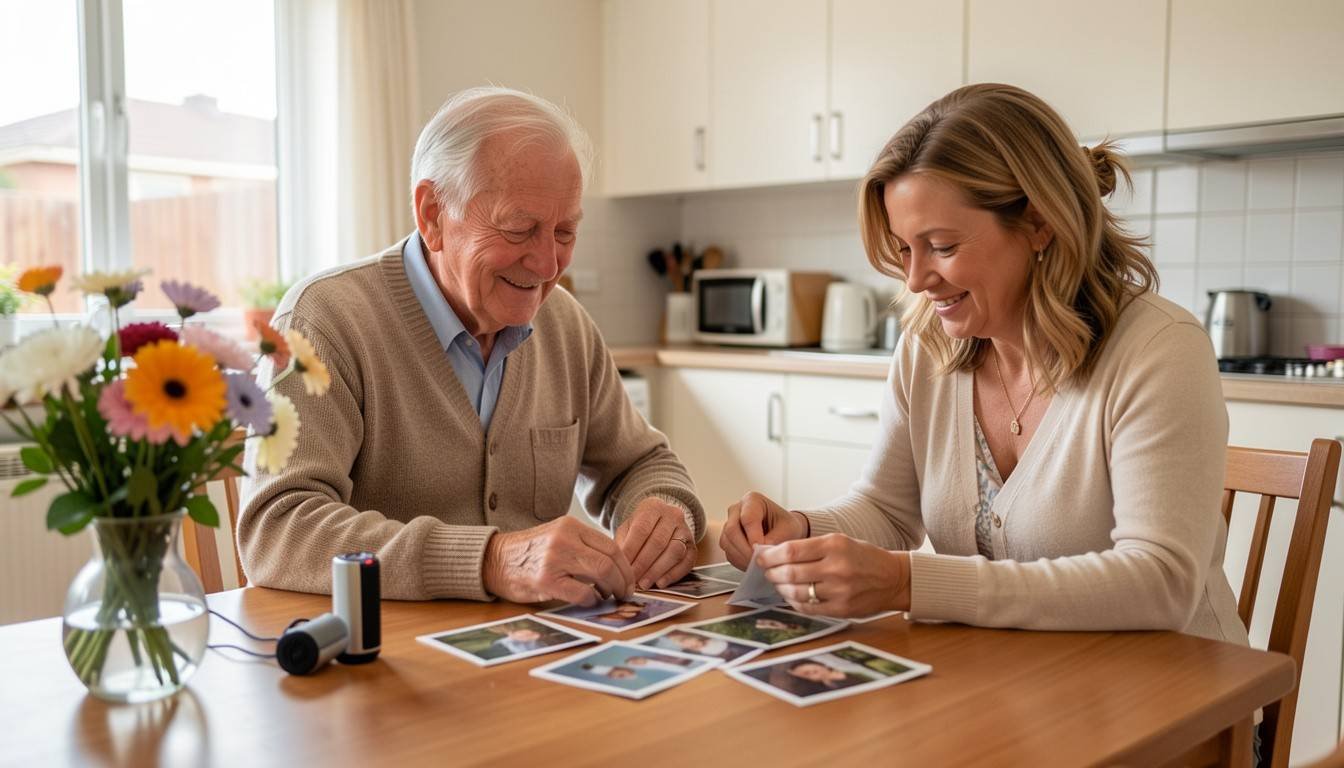
Looking through old photos, reading from a memory box, or sharing stories about places, people, and events from the past can spark genuine connection. Dementia Australia recommends reminiscence-based activities because they draw on long-term memories, which are often better preserved than short-term recall.
Build a simple memory box with items such as old letters, vintage objects, pressed flowers, a favourite book, or small mementos. Sit together and let the person lead. Ask open questions such as “Where was this?” or “What was she like?” rather than testing specific facts.
Reminiscence also works well with music. A familiar song from the 1950s or 1960s can spark memories faster than a photo. Use both together when possible.
Creative activities: painting, drawing, knitting, and craft
Creative activities offer an important outlet because they do not require memory to be meaningful. Someone who has lost the ability to follow conversation clearly may still enjoy painting a simple watercolour, kneading clay, sorting buttons by colour, or knitting with guidance.
IRT Australia lists creative activities including painting, knitting, and colouring as among the 50 most purposeful dementia activities, specifically because they support fine motor skills, emotional expression, and sensory engagement.
Keep the materials simple. A few colours, a moderate-sized piece of paper, and a calm space are enough. Avoid activities that require fine detail or precise accuracy if frustration is likely. Focus on the experience, not the product.
Puzzles, cards, and cognitive games
Cognitive activities such as jigsaw puzzles, simple card games, word games, and matching exercises keep the brain engaged without placing excessive demand on memory. Dementia Australia includes these in its recommended activities list, with the important caveat of matching the difficulty to the stage of dementia.
A puzzle with 500 pieces may be ideal in the early stages but can cause distress later. A simpler 24-piece puzzle or a picture-matching game often works better for someone with moderate dementia. Start easy, observe the response, and adjust. The right level should feel possible but not completely effortless.
Gardening and outdoor time
Gardening is one of the most consistently positive activities for older adults with dementia. Research cited by Homage Australia and Dementia Australia both note that gardening allows the person to spend time outdoors, engage physically, feel useful, and connect with nature.
You do not need a large garden. A raised planter box, a small herb pot, or a window box can give the person something to water, check on, and tend regularly. Routine tasks such as watering at the same time each day, pulling weeds, or picking herbs for cooking all fit naturally into a dementia-friendly daily schedule.
Short walks also help. Better Health Channel recommends walking as one of the best all-round activities for people with dementia because it supports mood, sleep, and physical health. Even a ten-minute walk in a familiar local street is worthwhile.
Gentle movement, sensory activities, and pets
Physical activity does not need to be demanding. Chair yoga, simple stretching, gentle dancing to familiar music, and slow walks around the garden are all appropriate options depending on mobility.
Sensory activities are particularly useful for people in the later stages of dementia. A hand massage with a favourite lotion, a warm blanket, a soft toy, a scented candle, or a rummage box filled with different textures can provide comfort and engagement without requiring language or memory.
Pets and animals also offer significant emotional benefits. Dementia Australia notes that animals can provide comfort and positive feelings. If a pet is not practical, even a video of animals or a visit from a friend’s dog can have a calming effect.
A sample dementia-friendly daily activity schedule
Here is a practical template Melbourne families can adapt. Adjust it based on what works for your loved one.
| Time | Activity |
|---|---|
| 7:30 am | Wake up, natural light, gentle dressing routine |
| 8:00 am | Breakfast together with familiar music |
| 9:30 am | Morning walk or garden task |
| 10:30 am | Creative activity or reminiscence |
| 12:00 pm | Lunch with calm setting |
| 1:00 pm | Rest or quiet time |
| 2:30 pm | Music session or card game |
| 3:30 pm | Light household task or sensory activity |
| 5:00 pm | Familiar television programme or gentle conversation |
| 7:00 pm | Wind-down routine, minimal stimulation |
| 8:30 pm | Consistent bedtime |
Keep this schedule consistent from day to day. Research on dementia routine care shows that predictability reduces sundowning, lowers evening agitation, and supports better sleep.
How activities change as dementia progresses
Activities that work well in the early stages may cause frustration in the middle stages, and the activities that suit the middle stages may need to be simplified further as needs change. The key is to observe responses and adapt without making it obvious you are changing things.
Dementia Australia’s activities guidance focuses heavily on what the person can still do. Keep checking in and adjusting. If a favourite activity starts causing frustration, simplify it or try a sensory alternative. If a new activity sparks a smile or clear engagement, add it to the regular schedule.
When to bring in extra support
Families who are managing daily care and activities on their own can burn out quickly. That is common, and it does not mean you are doing anything wrong. It means you need support too.
If you are finding it hard to keep daily activities consistent, or if safety, hygiene, or health needs are also growing, it may be time to look at additional options at home. For families in Melbourne, in-home companion care can bring structured social engagement, activity support, and consistent companionship into the day. If nursing needs have also emerged, in-home nursing care can help with clinical care at home. And if family carers need a break without moving their loved one away, in-home respite care is a practical way to get rest while care continues.
If you have not yet read the earlier guides in this series, the early signs of dementia families often miss and creating a dementia-friendly home room-by-room checklist are both closely relevant and worth reading together with this one. For a fuller picture of practical care at home, the in-home dementia care guide for Melbourne families also covers funding, care planning, and daily support options.
If you want to talk through what help may suit your situation, the team at Golden Point Age Care can have a calm, no-pressure conversation about what in-home services may work for your family.
FAQs
What are the best daily activities for someone with dementia at home?
Music, reminiscence, gardening, light household tasks, simple puzzles, gentle exercise, and creative activities are all effective options. Dementia Australia recommends matching activities to the person’s interests, ability, and stage of dementia.
How does music help people living with dementia?
A systematic review published in Frontiers in Medicine found that music therapy improves cognitive function and quality of life in people with dementia. A 2025 Cochrane review found that music-based therapy probably reduces depressive symptoms. It is one of the strongest evidence-based activity options available.
Why does daily routine matter so much in dementia?
A predictable routine reduces confusion, lowers anxiety and agitation, supports sleep, reduces sundowning symptoms, and gives the person a sense of control and dignity.
What activities suit someone with late-stage dementia?
Sensory activities such as hand massage, soft textures, familiar music, gentle touch, rummage boxes, and time outdoors with company tend to work well in the later stages when language and memory are more limited.
How long should activities last?
Short sessions of 15 to 30 minutes tend to work better than long, tiring stretches. Follow the person’s lead and stop before frustration sets in.
Can gardening help someone with dementia?
Yes. Research supports gardening as a beneficial activity for older adults with dementia because it involves physical activity, sensory engagement, time outdoors, and a clear purposeful role.
What is reminiscence therapy and how does it work at home?
Reminiscence therapy uses photos, music, objects, and stories to prompt memories and emotions linked to the past. It is effective at home because it draws on long-term memory, which is often better preserved in dementia than short-term recall.
What is the Montessori approach to dementia activities?
The Montessori approach for dementia gives the person a specific, meaningful role to carry out each day, such as folding laundry, watering plants, or sorting objects. It is effective because it focuses on what the person can still do, giving them a contribution and a sense of purpose.
Where can Melbourne families find dementia support?
Melbourne families can find dementia support through Dementia Australia, local community groups, and in-home care providers. Golden Point Age Care provides specialist in-home dementia care across Melbourne, including personal care, companion care, nursing, and respite support.

Clara Ashford
Clara Ashford is a Melbourne-based content writer specialising in healthcare and medical communications. With over a decade of experience, she creates clear, accurate and engaging content for healthcare brands, clinics and wellness organisations. Her work includes patient education materials, blogs, medical website copy, whitepapers and research articles, making complex medical information accessible and relatable. Passionate about improving health literacy, Clara combines storytelling with medical expertise to connect with readers. Outside of work, she enjoys exploring Melbourne’s café scene, reading contemporary fiction and walking along the Yarra River.
